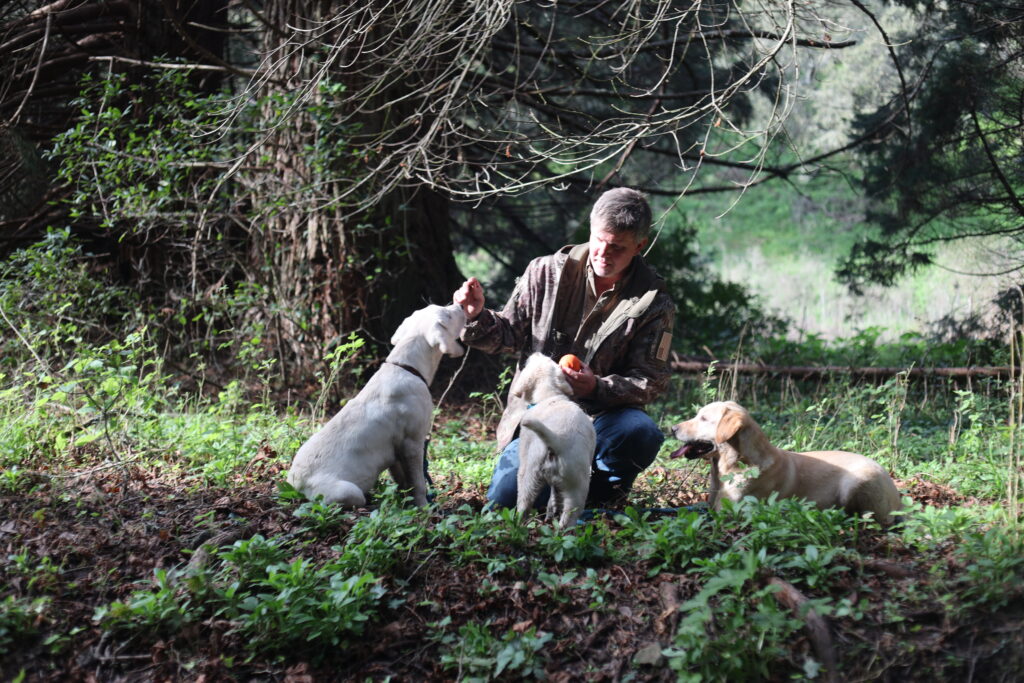
Sensory Awareness: How Your Dog Really Experiences the World
Before we ask a dog to listen, we ask what they’re hearing, smelling, and seeing. Dogs process their environment through five senses that are often sharper, and more easily overwhelmed, than our own.
Dogs take in far more sensory information per second than people do. Sounds, scents, and movement that we barely register can dominate a dog’s attention, especially in unfamiliar or crowded spaces like sidewalks, cafés, or vet waiting rooms.
Why It Matters
A dog who won’t “listen” on a walk usually isn’t being defiant, they’re saturated. Recognizing sensory load is the first step in every Marin K9 training plan, because a dog who is overwhelmed cannot learn, no matter how good the cue.
A dog that looks defiant is often just overwhelmed by what they’re sensing.
How We Apply This at Marin K9
We start every private training session and behavior consultation by assessing what a dog is sensing in their everyday environments, home, neighborhood, car rides, before building any obedience or behavior modification plan around it.
Related reading: Why Your Dog Isn’t “Stubborn” — It’s Sensory Overload
Some dogs genuinely have lower sensory thresholds, breed, age, and prior experience all play a role. We assess your dog specifically rather than assuming.