Every training decision starts with watching, not acting. Reading a dog’s body language and their environment first prevents the wrong response to the right behavior, or the right response to the wrong cause.
Before stepping in, we look at posture, ear position, breathing, and where the dog’s attention is, plus what’s actually happening around them, to understand why a behavior is occurring.
Why It Matters
A dog who lunges out of fear needs a very different response than one who lunges out of frustration or excitement. Correcting the behavior without assessing the cause often makes the underlying issue worse.
The same behavior can have opposite causes, watch before you act.
How We Apply This at Marin K9
Every assessment and behavior modification plan at Marin K9 begins with structured observation, in your home, on walks, and in the specific situations that trigger the behavior you’re working on.
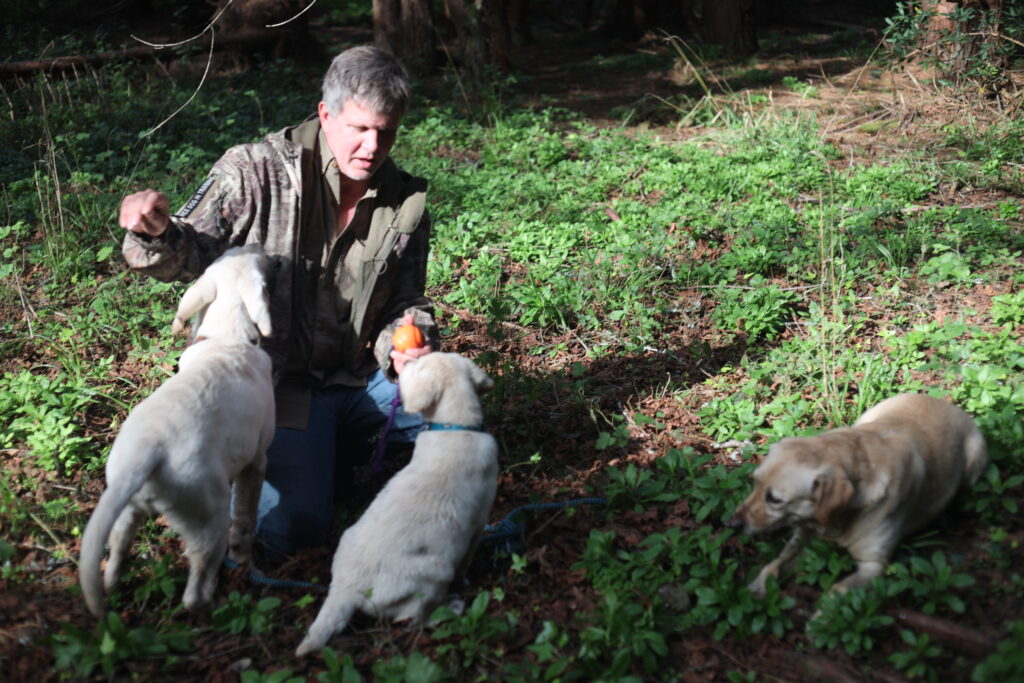
Watching body language closely before choosing a response.
Real-World Example
The same dog, the same walk, two very different approaches.
BEFORE
Without This Principle
A lunge treated the same, whether it's fear or excitement
Corrections applied without knowing the cause
Body language warning signs missed until it's too late
Same response used regardless of context
AFTER
With This Principle
Fear-based and excitement-based behavior handled differently
Root cause identified before any response is chosen
Early warning signs caught and addressed
Response tailored to what's actually happening
Signs You Need This Principle
You're not sure if your dog is scared, excited, or frustrated
Corrections seem to make the same behavior worse over time
You've been told to just “be more dominant” without results
You want to understand your dog, not just control them